



In the world of collegiate sports coaching, stepping onto the court as a woman in charge of a men’s tennis team isn’t just about strategy and skill—it’s about challenging perceptions and breaking through barriers that have long defined the game. For me, this transformative journey began on the sun-drenched courts of South Africa, where my love for tennis first took root and where I learned early on that nothing comes easy and gender should never limit the pursuit of your dreams towards excellence.
From a young age, tennis was more than just a game; it was a passion that ignited a fire within me to compete, coach, and lead. Growing up in South Africa, I spent countless hours hitting balls against the garage door, dreaming of one day playing competitively. Those early moments shaped my path and instilled a deep-seated determination to succeed in the sport I loved.
Stepping into coaching wasn’t just about pursuing a career—it was about advocating for inclusivity, demonstrating that effective coaching transcends gender, and showing that women can excel in roles traditionally held by men. Each step forward, from player to coach, was driven by a passion to redefine what’s possible and inspire others to pursue their dreams without limitations based on gender.
As I progressed through my own playing career and made the transition into coaching, I soon came to realize the striking reality of coaching collegiate sports: the field, especially in coaching men’s teams, was overwhelmingly dominated by men. This awareness gave me the motivation and determination within to not only establish my place in this landscape but also to create opportunities for other women aspiring to enter coaching.
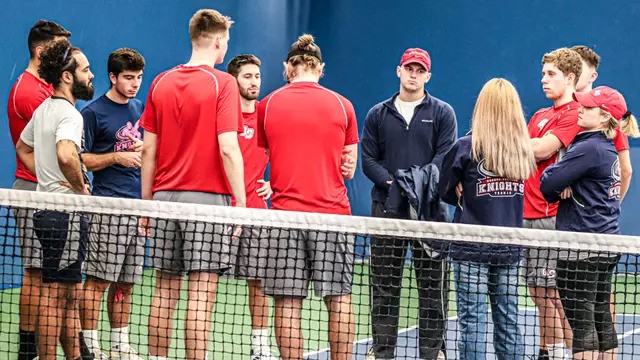
Seeing predominantly male coaching staffs across collegiate sports motivated me to challenge the status quo. I believed then, as I do now, that diversity in coaching enriches the sport, bringing different perspectives and approaches that benefit athletes and teams alike. My journey wasn’t just about personal achievement; it became a mission to break down barriers and pave the way for more gender diversity in sports leadership.
The path to securing the position was laden with challenges. During the rigorous interview process, subtle hints of skepticism about my ability to handle a men’s squad raised in the form of analytical questions. Yet, each inquiry served as a platform to articulate my vision for the team’s success and outline my strategic approach to achieving it. I stood firm in my belief that my gender should never be a deterrent but rather a testament to my unique perspective and coaching prowess.
My journey as a coach began as assisting a women’s team, provided invaluable experience in cultivating talent, building team cohesion, and fostering a supportive environment. It was a foundational step in my coaching journey, where I learned the intricacies of leadership and player development. However, as I gained confidence and experience, I felt compelled to seek new challenges. When the opportunity arose to coach a men’s team, I saw it not just as a career advancement but also as a chance to break down stereotypes and show that effective coaching transcends traditional gender roles and expectations.
Stepping onto the court as the head coach of a men’s college tennis team felt both exhilarating and daunting. The players were talented and driven, eager to excel under my guidance. Yet, behind their enthusiasm, I sensed the unspoken doubts about whether a woman could lead them to victory. It was a challenge to earn their respect and to prove that my gender didn’t define my coaching prowess.
One of the greatest hurdles was navigating the balance between authority and approachability. As a woman coaching men, there’s a fine line to walk—asserting leadership without coming across as overbearing, demanding respect without compromising on standards. I found that establishing clear communication and mutual respect were key. It was about building relationships based on trust and demonstrating that my gender didn’t dictate my ability to strategize, motivate, and lead. It was about building relationships based on trust and demonstrating that my gender didn’t dictate my ability to strategize, motivate, and lead.
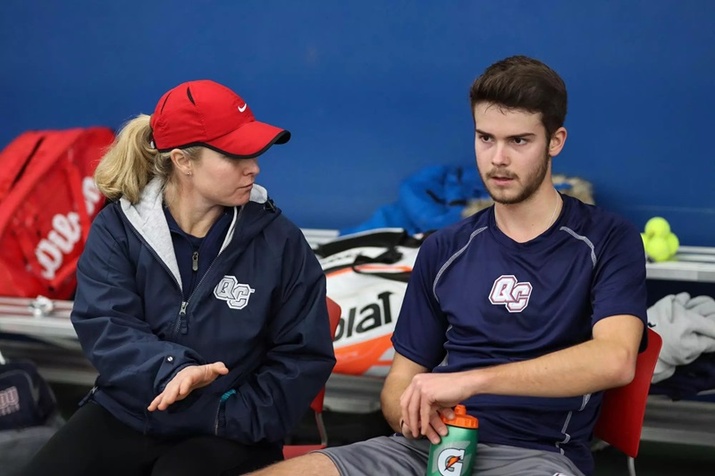
Talking to other coaches, both men and women colleagues alike, I encountered differing viewpoints. Some male coaches expressed doubts about my capacity to command respect and manage the competitive dynamics inherent in men’s collegiate tennis. Many raised concerns about whether my coaching style would resonate with male athletes, given the differences in communication and leadership styles often associated with gender. Their concerns underscored the pervasive stereotypes that still dominate sports coaching, highlighting the skepticism towards women in leadership roles in male-dominated sports and the ability to command respect and handle the competitive nature of men’s college tennis.
When speaking to most female coaches they were hesitant to coach men’s tennis teams due to various societal and cultural factors. Historically, sports coaching, especially for men’s teams, has been dominated by men, perpetuating a stereotype that coaching men requires a specific confidence and authoritative demeanor that some perceive as more naturally fitting to male coaches. This stereotype is creating uncertainties in female coaches and their ability to command respect and effectively manage the dynamics of a men’s team. Additionally, the lack of representation of women in coaching roles for men’s sports reinforces the perception that coaching men is an unconventional path for women. Cultural expectations and deep-seated gender norms further contribute to the unwillingness, as women may internalize societal beliefs about roles and capabilities in sports leadership. Despite these challenges, many women have successfully overcome these barriers, proving their competency and paving the way for greater gender diversity in coaching roles across all levels of sports.
On the other hand, there were a few female coaches who offered steadfast support and solidarity, sharing their own experiences of breaking into traditionally male-dominated fields. They emphasized the importance of perseverance and determination in navigating the challenges ahead focusing on solidarity and encouragement, sharing their experiences of breaking into male-dominated fields, and offering strategies for navigating the challenges ahead. Their encouragement was invaluable, providing insights into effective strategies for building trust and fostering a positive team culture. This diverse range of perspectives – from skepticism to support – underscored the complexities of gender dynamics in collegiate sports coaching and reinforced my commitment to breaking down barriers and paving the way for greater gender equity in the field.
The opportunity to coach a men’s team was given to me by a woman in a position of great influence who acknowledged my potential to lead a successful program. This gesture reinforced my belief that mentorship and support from women in power are crucial in empowering the next generation of female coaches.
In personal experience taking the helm as the head coach of a men’s college tennis team was both exhilarating and daunting. Every practice, match, and season presented an opportunity to challenge stereotypes and redefine expectations. Beyond the technical and strategic aspects of coaching, I found myself navigating the complexities of leadership, striving to strike a balance between authority and approachability. Building trust and fostering open communication became paramount as I worked to earn the respect of my players and peers alike.
Statistics underscored the disparity: only a fraction of collegiate tennis coaches are women, and even fewer hold positions coaching men’s teams. This reality added weight to my role—not just as a coach, but as a trailblazer. According to recent data, women make up just 26% of head coaches in NCAA Division I men’s sports, highlighting the rarity of women in leadership roles in this arena. Despite these odds, my presence on the court was a daily reminder that coaching prowess transcends gender.
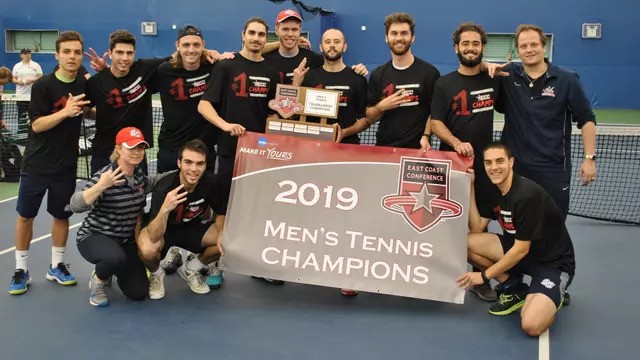
Just a few years ago, I found myself in a unique position as the only female coach dedicated solely to a men’s team in the entire country. Being a trailblazer in this regard motivated me to advocate for more opportunities for women in coaching roles, highlighting the importance of inclusivity and breaking down barriers in the sports industry.
In addition to coaching, I serve as the National Ranking Chair for Men’s D2 Tennis, overseeing the ranking process and ensuring fairness and accuracy in collegiate tennis competitions. This role has not only allowed me to contribute to the sport at a broader level but also highlighted the importance of diversity in coaching.
More women are entering coaching roles in collegiate sports, and the conversation about gender equity in athletics continues to evolve. The path ahead remains challenging, but the strides made—and the victories won—serve as a testament to the power of perseverance and belief in one’s abilities.
Coaching a men’s college tennis team wasn’t merely a job; it was a platform to advocate for gender equity and inclusivity in sports leadership. The successes we achieved on the court served as a powerful testament to the impact of diversity in coaching. Each victory, each milestone, became a stepping stone toward a future where gender doesn’t dictate opportunity or achievement.
There were moments of doubt, times when the pressure to perform seemed amplified by the scrutiny placed on my gender. Yet, with each passing season, victories mounted, and perceptions shifted. The team’s success under my guidance spoke volumes, challenging the notion that men’s sports are exclusively coached by men.
In the end, we need to look beyond the victories on court, coaching tennis is a platform to inspire change. I saw firsthand how my presence motivated young women to consider coaching careers and encouraged young men to embrace gender equity in sports leadership. It wasn’t just about coaching; it was about being a role model, about showing what’s possible when passion, skill, and determination converge.
Today as I reflect on my journey, I am reminded of the progress made and the work still ahead. More women are entering coaching roles in collegiate sports, yet the path remains challenging. By sharing my story and experiences, I hope to inspire others—both men and women—to challenge boundaries, embrace diversity, and champion equality in sports and beyond. Coaching a men’s college tennis team wasn’t just about winning matches; it was about breaking barriers and paving the way for a more inclusive future in sports coaching. As I continue to lead and inspire, I hope my story encourages others to challenge boundaries, embrace opportunities, and pursue their passions, regardless of gender.

