
• Latest
  • Trending
  • All
What is stimp, and how do Stimpmeters work? Here’s what you need to know

What is stimp, and how do Stimpmeters work? Here’s what you need to know

March 31, 2025
Freya Anderson Pips Eva Okaro In 100 Free

Freya Anderson Pips Eva Okaro In 100 Free

April 21, 2025
Aussie Weekly Wrap: Smith breaks drought in Houston | 7 April, 2025 | All News | News and Features | News and Events

Aussie Weekly Wrap: Smith breaks drought in Houston | 7 April, 2025 | All News | News and Features | News and Events

April 21, 2025
Piastri bests Verstappen after first turn Saudi Arabian scuffle

Piastri bests Verstappen after first turn Saudi Arabian scuffle

April 21, 2025
Golf punished 2 golfers this weekend. And the scene was also beautiful

Golf punished 2 golfers this weekend. And the scene was also beautiful

April 21, 2025
Top favourites Jai Hindley and Antonio Tiberi predict open, aggressive Tour of the Alps in key pre-Giro test

Top favourites Jai Hindley and Antonio Tiberi predict open, aggressive Tour of the Alps in key pre-Giro test

April 20, 2025
Zhao Xintong – ‘I know I can be a champion again on the tour’

Zhao Xintong sends message with scoring masterclass

April 20, 2025
Angharad Evans Eyes Breaststroke Double

Angharad Evans Eyes Breaststroke Double

April 20, 2025
Serena Williams Named to Time’s 100

Serena Williams Named to Time’s 100

April 20, 2025
UNDER ARMOUR LAUNCH NEW LINE OF DRIVE PRO SERIES SHOE – Golf News

UNDER ARMOUR LAUNCH NEW LINE OF DRIVE PRO SERIES SHOE – Golf News

April 20, 2025
World Women’s Snooker Championship 2025 | Enter Now

World Women’s Snooker Championship 2025 | Enter Now

April 20, 2025
James Guy and Duncan Scott to battle in 200 free at British Trials

James Guy and Duncan Scott to battle in 200 free at British Trials

April 20, 2025
Australian Claycourt Championships kick-start junior tennis calendar | 9 April, 2025 | All News | News and Features | News and Events

Australian Claycourt Championships kick-start junior tennis calendar | 9 April, 2025 | All News | News and Features | News and Events

April 20, 2025
Wednesday, March 25, 2026
My Afro Daily
  • Home
  • Global News
  • Basketball
  • Cycling
  • Football
  • Formula 1
  • Golf
  • Snooker
  • Swimming
  • Tennis
Social icon element need JNews Essential plugin to be activated.
No Result
View All Result
My Afro Daily
No Result
View All Result

What is stimp, and how do Stimpmeters work? Here’s what you need to know

by Venesa6
March 31, 2025
in Golf
0
What is stimp, and how do Stimpmeters work? Here’s what you need to know

By:

Erika Larkin, Top 100 Teacher


March 31, 2025

What is stimp?

What is stimp? We got you covered!

GOLF

You’ve heard the term mentioned on the course, during golf broadcasts and even in conversations with your golf buddies — stimp. It’s used to indicate how fast or slow the greens are by assigning them a number. 

While you may already be familiar with the concept, many golfers are still a little unclear on how it is actually calculated or determined. But…not for long! We’re going to clear a few things up on stimp readings, and even give you a few pointers that you can use to boost your feel and performance on the greens. 

What is “stimp”?

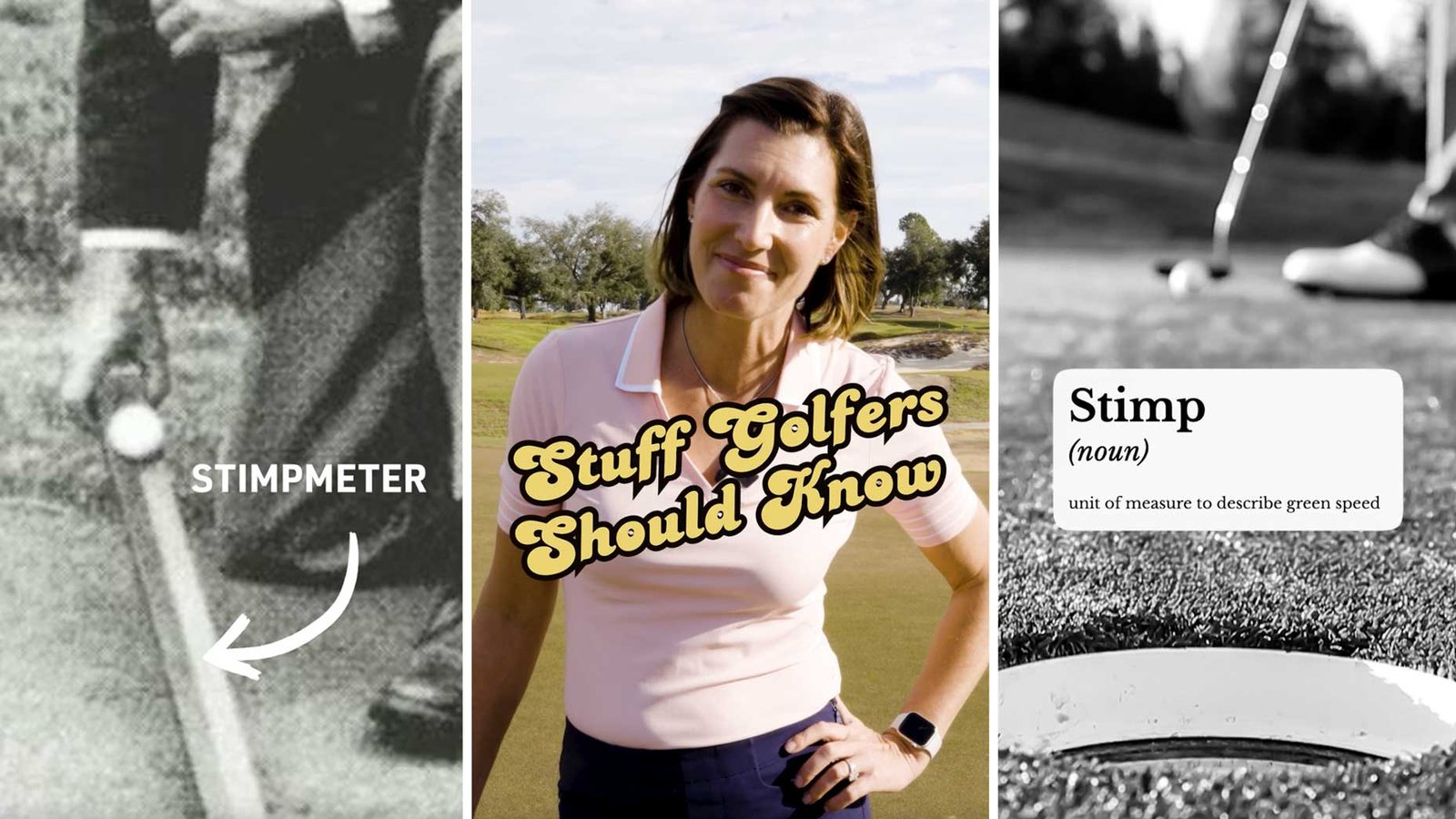
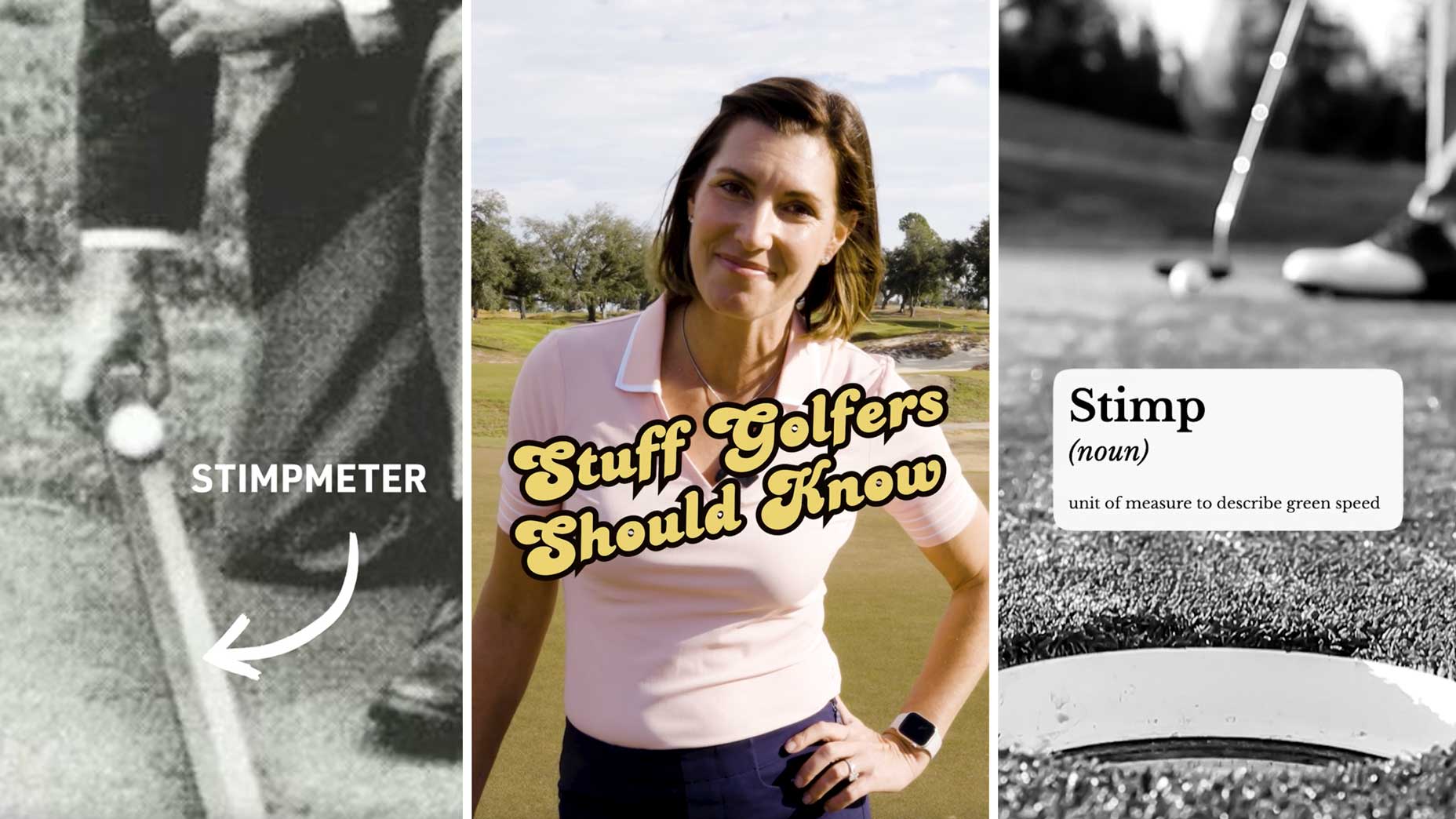
The “stimp”, or stimp rating, at a course is the unit of measure to describe green speed. Before its invention, greens often varied in speed from hole-to-hole — a challenge for both players and course superintendents. 

Enter Edward S. Stimpson, the 1935 Massachusetts Amateur champion and inventor of the Stimpmeter. Stimpson’s innovation was driven by his pursuit to achieve accurate, objective and statistically valid measurements for the speed of a putting green. 

What is a Stimpmeter?
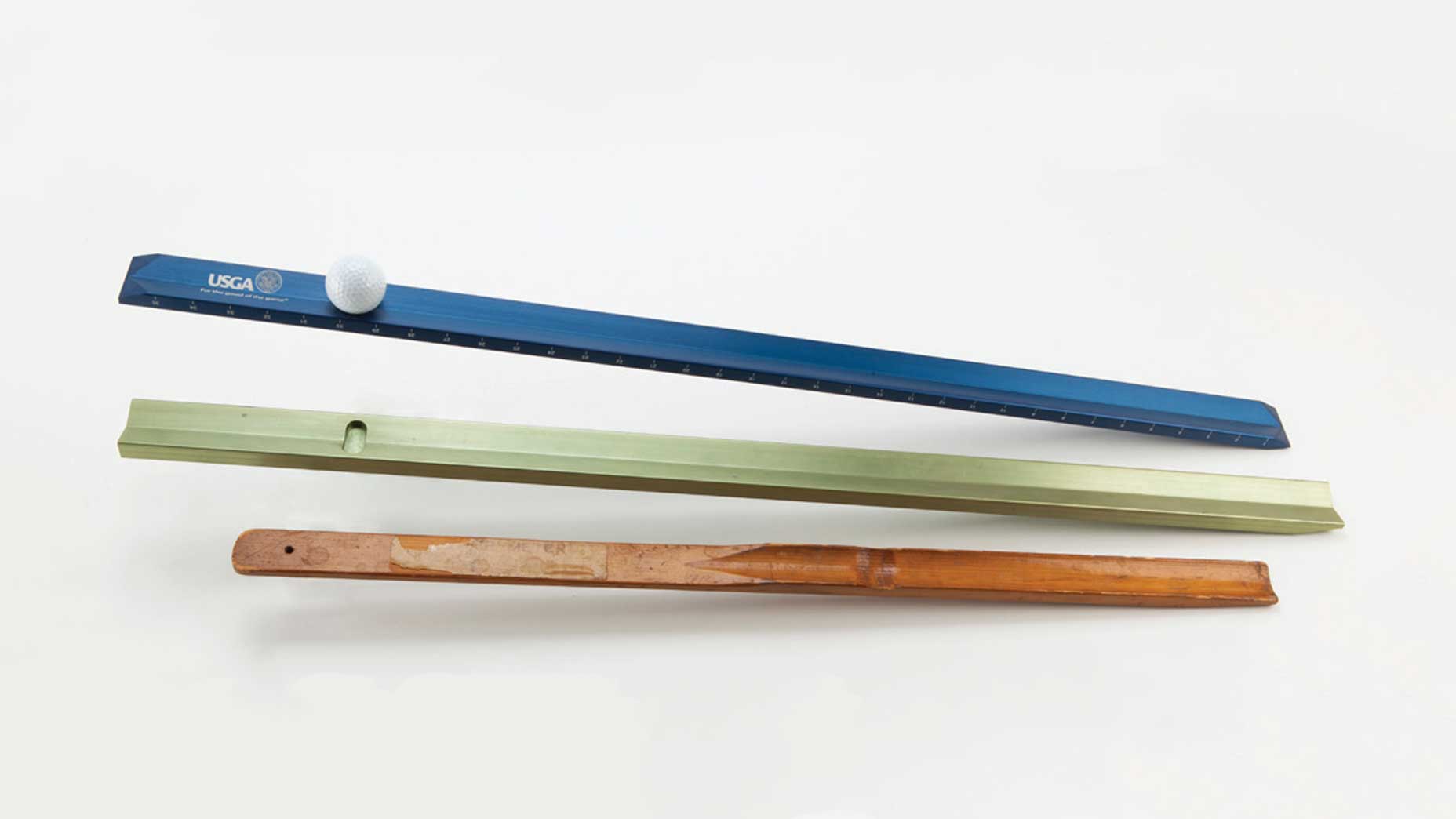
Stimpmeters over time
Stimpmeters have evolved over time.

USGA

A Stimpmeter is a simple, accurate device used to determine the speed of the green by measuring ball-roll distance. Originally these ruler-like instruments were made from wood, but today’s Stimpmeters are made from aluminum. 

According to the USGA, every Stimpmeter should be 36 inches long, with a notched end and tapered end. The tool should have a V-shaped groove on each side that has an angle of 145 degrees that allows a consistent roll every time.

The devices also should also have two ball-release notches on either side. The standard ball-release notch, or 1X notch, is positioned 30 inches from the tapered end; this is referred to as the full-length run, and should be used whenever possible.

On the opposite side, there is an alternate, or 2X, notch set 14 inches from the tapered end. This ball-release notch is referred to as the half-length run and should be used only as a substitute when conditions do not allow for a full-length run. 

Both notches are designed so the ball will always release when the Stimpmeter is raised to an angle of 20 degrees. This ensures the velocity of the ball will be constant. 
Golf scorecard featuring a golf handicap and golf ball.

What is a golf handicap, and how is it calculated?

By:

Kevin Cunningham


How to use a Stimpmeter

You can find in-depth directions for using a Stimpmeter on the USGA’s website, but here are the basics for using this precise measuring instrument:

Step 1: Find a level, wide area of the green, ideally with 10 to 12 feet in a single direction.

Step 2: Place a tee at one end of the level area to serve as your starting point. Hold the Stimpmeter by the notched end and rest the tapered end on the green beside your tee. Aim the device in the direction you intend to roll the ball.

With the Stimpmeter positioned low to the ground, place a ball in the 1X notch. Slowly raise the stimpmeter, keeping the tapered end flush with the green, until the ball releases. Hold the device steady until the ball reaches the putting surface. Repeat this procedure with two more balls, keeping the tapered end on the same exact spot.

Step 3: All three balls should come to rest within 8 inches of each other. If they are farther apart, there are a few things that could have gone wrong: the Stimpmeter moved while testing, the balls might be damaged, unusual conditions could exist, or you may need to use the 2X notch. 

If your balls stayed within the 8-inch radius, place another tee in the green at their average stopping point. Using a measuring tape, calculate the distance between the two tees and note the length of your first series. 

Step 4: Repeat the same process, but going in the opposite direction. The second tee you placed will be your starting point and the first tee will be your target. Roll three balls along the same line, then calculate the measurement (if different) to establish the length of your second series. 

Step 5: Calculate the average of both sequences and you’ve found the speed of the green. 

What you really need to know about stimp

Let’s get real. As a player, knowing how to calculate stimp isn’t nearly as helpful as knowing how to interpret the outcome. So, here’s a quick break down what constitutes a fast or slow green:

Slow stimp rating: about 8 to 8.5 feet

Fast stimp rating: 12 feet or more

The next time you head to the course, ask the golf shop or starter what the stimp rating is for the day. Not only will you sound like a pro, but you’ll also be better prepared for your round, and know how soft or firm to hit your putts during the round. 

generic profile image

Previous Post

NCAAW: Without Watkins, can USC reach Final Four over UConn, Bueckers?

Next Post

Big update on Salah’s contract: Talks advance, but one key factor causing delay – report

Venesa6

Venesa6

Next Post
Big update on Salah’s contract: Talks advance, but one key factor causing delay – report

Big update on Salah’s contract: Talks advance, but one key factor causing delay - report

Leave a Reply Cancel reply

Your email address will not be published. Required fields are marked *

  • Privacy Policy
  • Contact Us

Copyright © 2023 - All rights reserved.

Social icon element need JNews Essential plugin to be activated.
No Result
View All Result
  • Home
  • Global News
  • Basketball
  • Cycling
  • Football
  • Formula 1
  • Golf
  • Snooker
  • Swimming
  • Tennis

Copyright © 2023 - All rights reserved.