


Nate Peterson/Vail Daily
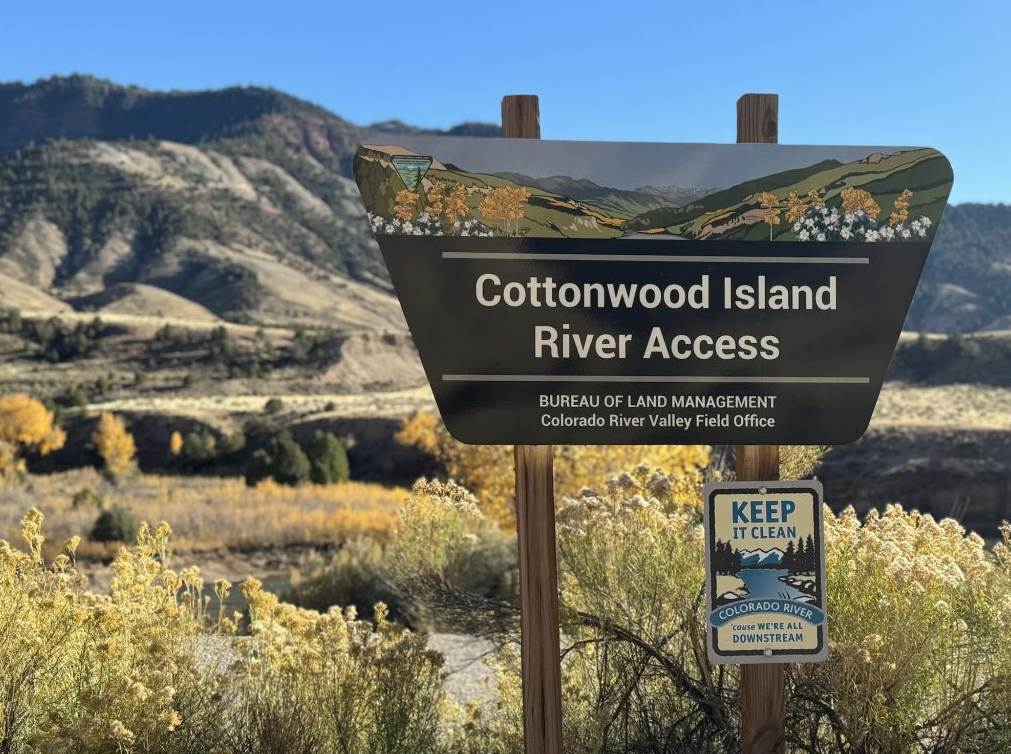
A man who died in the Colorado River at the Cottonwood Island boat launch in July 2023 was one of several parties of swimmers to drown in that area over a two-year period, according to records recently released by the Eagle County Sheriff’s Office.
Fatalities among parties of swimmers occurred in August 2021 and July 2022, and the most recent incident occurred on July 23. On July 28, the Vail Daily requested sheriff’s office reports for that incident and others. Those records, released Sept. 29, show similar incidents occurring among people enjoying public access to the banks of the Colorado River at the popular destination.
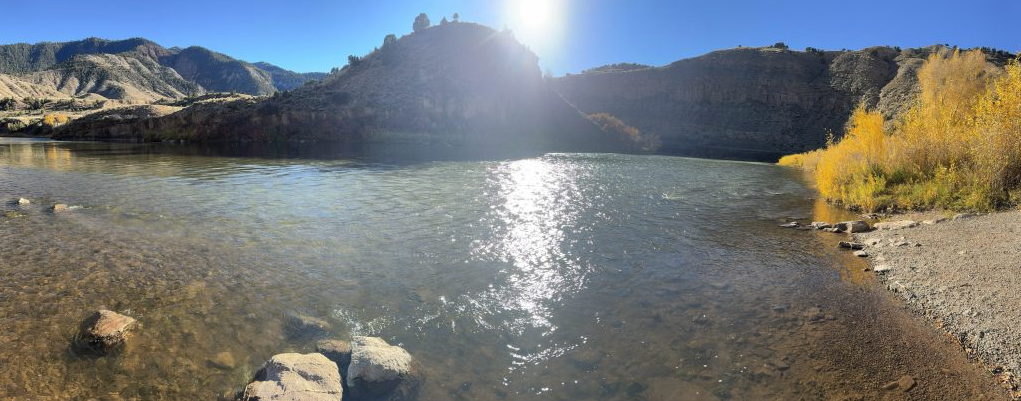
An island on the river near the Cottonwood Island boat launch entices swimmers, but as an Eagle County Sheriff’s Officer said of a woman who witnessed an August 2021 drowning there, “She is a good swimmer and was very surprised as to how fast the current was beneath the water.”
The boat launch is about six miles up the Colorado River Road from the Dotsero roundabout located off Interstate 70.
The name of that witness, along with all others, has been redacted from the Sheriff’s Office reports. But witnesses to the most recent incident have come forward saying something needs to be done to increase awareness about how dangerous the area can be.
“It’s really swirly there,” said local paddleboarder Erin Hood. “Because the river goes around Cottonwood Island and then hits the bank on river left, it creates these whirlpools and eddy lines.”
The July 23 fatality involved a party of two swimmers and two non-swimmers, said witness Sean Gerdes. The incident would likely be a double or triple fatality if not for the heroics of Hood, who saved the life of the other non-swimmer, Gerdes said.
“I don’t know how she did it,” he said.

‘Rivers are deceiving’
Hood grew up on a river in Northern Idaho where she learned at a young age the dangers of moving water. The first rescue she remembers occurred when she was 4.
“I remember my 3-year-old cousin playing in the river and being in an inner tube, and one of the adults letting go,” she said. “It only took a split second for her to get swept down.”
Hood’s father rescued her cousin, who grew up to become a competitive swimmer. It was one of countless rescues Hood saw her father perform over the years.
“My dad is always going to the put-in and posting signs saying: ‘Must have life jackets and footwear and experience on the river,’” she said.
But incidents still arise.
“Rivers are deceiving, they’re powerful, they change overnight,” she said. “You always wear good shoes and you always wear PFDs, often you wear a helmet, somebody has a throw bag, and you always have whistles on your PFDs.”
It’s part of a routine that Hood knows well, but even she said she’s still learning.
“Sometimes we have stored the life jackets in the raft, and you’re on the boat launch, getting your life jacket on,” she said. “I’m not going to do that anymore, I’m going to keep the life jacket in the cab of the truck and put it on, then get out, and then take the boat out … I’m going to have my life jacket on, and my throw rope, and my whistle.”
‘I shouldn’t have tried to save two people by myself’
On July 23, Hood said she probably shouldn’t have jumped in to perform the rescue.
“From a safety perspective, I should have had someone else out there with me, I shouldn’t have tried to save two people by myself,” she said.
She said instead, she should have attempted to use a throw rope from the river’s edge.
“You’re always safer on good footing, so having my throw rope is better than me jumping in the water after someone, because then I become a liability for everyone else, and I could have potentially have taken down more people if three other people had come out to save the three of us,” she said. “It could have been like an avalanche.”
In addition to having a boat launch, the Cottonwood Island area was improved by the Bureau of Land Management in 2018 to include a picnic site and vault toilet. Camping is allowed on the island, for those who can get to it, and the area attracts cliff jumpers, as well, on a nearby rock face.
Hood was there getting set up for a normal day on the river before the incident occurred on July 23. She was helping some friends launch their boats and watching children who were playing in the area while waiting to launch her own stand-up paddleboard behind her group.
“We all-of-a-sudden looked out and noticed that there were heads in the current around Cottonwood Island, and we’re like, ‘That’s not right,’” she said. “I just launched my paddleboard and paddled as hard as I could out there; I saw two heads, one was staying above water mostly and then going under, the other was going under for a very long time.”
In retrospect, Hood said, if she was determined to attempt a rescue, she should have blown her whistle three times first, to alert others to the fact that there was a rescue underway. Instead, she screamed. She said she hoped that would accomplish the same thing.
“It felt loud to me, but people on the beach said they barely heard it,” she said.
The first man she reached in the water could swim but was extremely fatigued from trying to save the other man, who could not swim.
“I yelled to the man who was above the water to hold onto the paddleboard; I saw the other man had been under for a while, I couldn’t see him, and then I saw his hand and arm, deeper than my foot,” she said.
Hood, who stands 5 feet, 10 inches, said she had to completely submerge herself to reach the man, but was eventually able to hook him by the armpit with her foot. She pulled him up and put him on her shoulder in a way that would help get oxygen to his brain. Another boater met them near the island and collected the other man, and Hood began paddling back to shore with what she feared was a dead body.
“It felt like forever,” she said. “He hadn’t been breathing, I thought he was gone.”
But at some point, on her shoulder, she felt him have a seizure.
“That gave me hope,” she said.
On shore, they were lucky to be greeted by bystanders with medical training, who were able to get a pulse on the man. He survived with no medical complications.
But as CPR was being performed on him, one of his companions, the other man who knew how to swim, said something terrifying, Hood said.
“He pointed to the water and said, ‘uno mas,’” Hood said.
She again launched her paddleboard, but with no life-saving result this time. There was no sign of the man, who was later identified as 32-year-old Isaac Montaño Rivera, a father of one.
Hood said she is still learning lessons from rivers, even after a lifetime of exposure to their dangers, and said she learned several in this incident, which she hopes to pass on to her children.
“They’re 9 and 11, but I don’t think that’s too young to know CPR, and to know the order of things,” she said. “Blow your whistle first, scream for help, start CPR, know the right process of things, as well as not leaving the car without your life jacket.”
Hood said the other big lesson is the same one she received as a child, watching her 3-year-old cousin drift downstream — it only takes an instant to get swept into the river’s current.
“Their intention wasn’t to swim,” she said of Rivera and the man she rescued. “They didn’t have footwear, they didn’t have PFDs.”
For anyone attempting to wade into the water a little to cool off your feet, “You could slip on a rock and go in at any moment,” she said.

