


“], “filter”: { “nextExceptions”: “img, blockquote, div”, “nextContainsExceptions”: “img, blockquote, a.btn, a.o-button”} }”>
Heading out the door? Read this article on the new Outside+ app available now on iOS devices for members!
>”,”name”:”in-content-cta”,”type”:”link”}}”>Download the app.
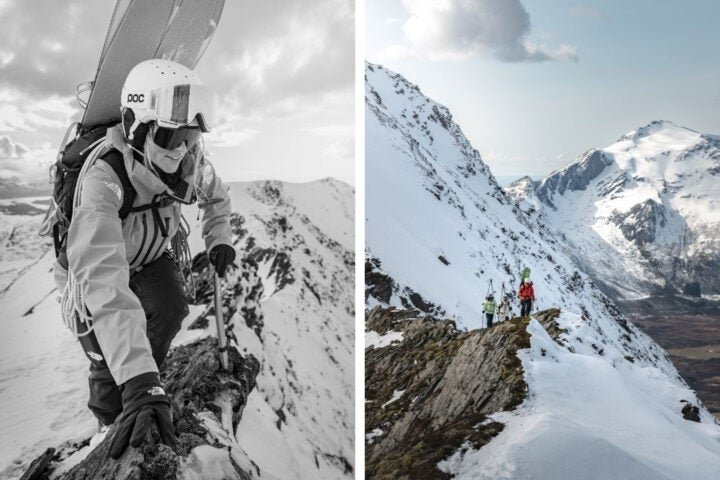
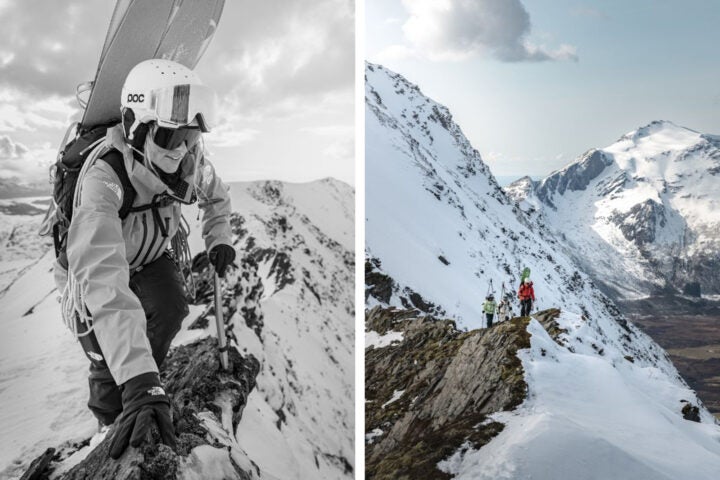
The POC Calyx is their first helmet certified for skiing, mountaineering, and cycling. This one will appeal to the most self-sufficient of adventurers, the ones who pedal into the hills, straight from the door, with their skis or split board in tow.
When the slush turns to snow, the bike is stashed and the skins go on before the serious matter of winching up the hill begins, giving way to some well-earned turns. Arguably, a helmet is an essential piece of kit at every stage of this multi-sport journey.
A Multi-Sport Helmet
POC believes their helmet is the perfect one for the job. Its modular construction and adjustability allow it to adapt at every transition.
Physical exertion, and thus heat generation, is likely to vary wildly throughout the abovementioned fun-filled day in the mountains. To accommodate that, POC has endowed the Calyx helmet in a multitude of vents that can be opened and closed independently, tuning the amount of ventilation.
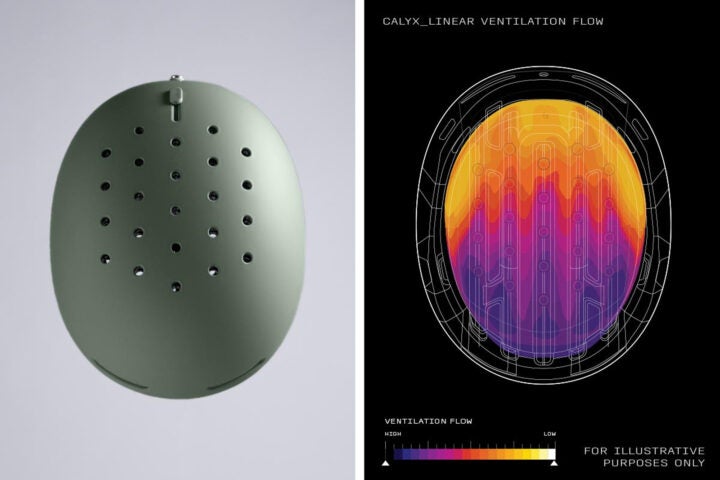
Adjustment of the vents is a tool-free affair, so one could feasibly open and close them without having to remove the helmet at all. It looks like you could easily adjust them while riding, too.
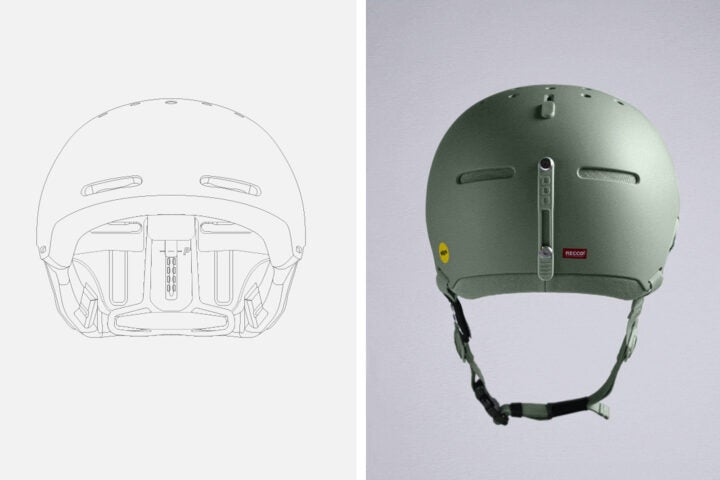
When it’s time to skin up the hill, the retention system that protrudes below the helmet’s trim can be retracted up into the shell on its ratchet system, so that the helmet can be strapped onto a pack without crushing the cradle.
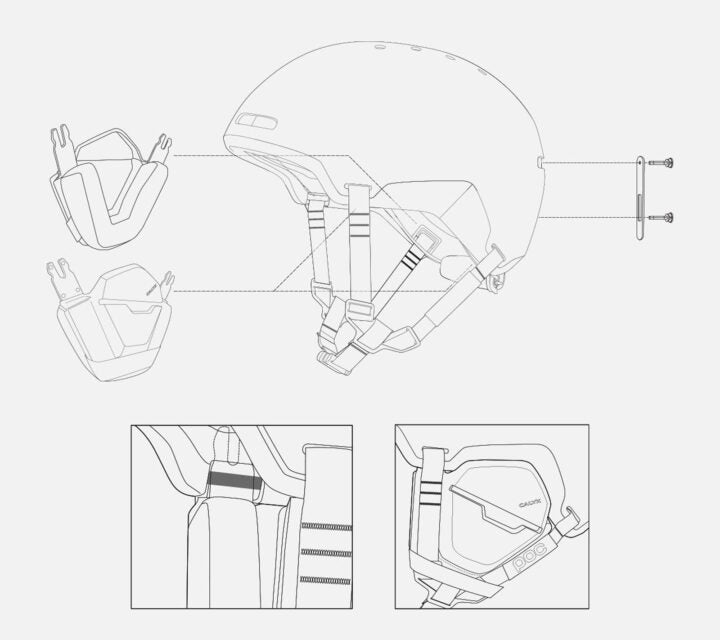
Then, at the summit, the helmet can be quickly converted to snow sports mode. Close the vents, pop the removable ear pads into their respective positions, and add the neck warmer to the chin strap.
POC Calyx Safety Features & Certifications
Helmets for skiing, mountaineering, and cycling each have their own safety requirements that must be met in order to receive the appropriate certification. While ski and cycling helmets are subjected to drop tests to simulate an impact, mountaineering helmets must also be tested against penetrative forces, simulating a rock fall.
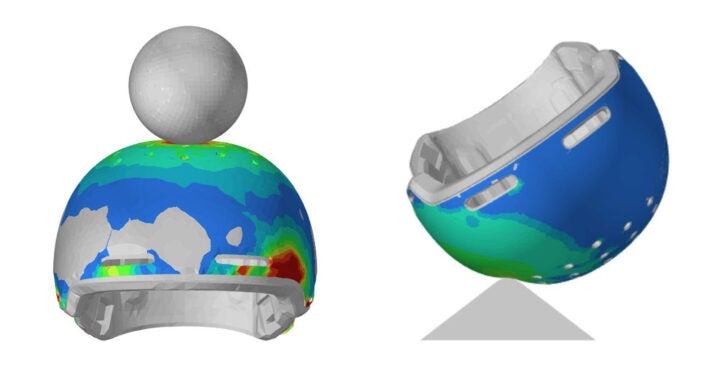
The PC Calyx hits the mark on all fronts, and thus has the following certifications:
- EN 1077
- EN 1078
- EN 12492
- CPSC 1203
- ASTM F2040
The only region in which it is not certified for cycling (but is certified for skiing and mountaineering) is Australia.
Conferring protection is a dual-density EPS liner, topped with either an ABS shell or a lighter carbon shell, model-dependent. A MIPS Evolve liner goes in to mitigate rotational forces that would otherwise be transferred to the wearer’s skull in the event of an oblique impact.
A bonus feature, should you ever need the services of a search and rescue team, is the RECCO Rescue Reflector. It helps a search party, in possession of a RECCO Detector, to more easily locate a lost or injured adventurer. It’s a radar system, so the RECCO reflector on the helmet does not require a power source. We’ve seen POC use this in clothing, as well as helmets.
Pricing & Availability
The POC Calyx is available in sizes XS/S (51-54cm), M/L (55-58cm), and L/XXL (59-62cm). There are two models to choose from:
- POC Calyx (with ABS Shell), retailing at EUR 249, $250 USD, and GBP 220
- POC Calyx Carbon, retailing at EUR 399, $400 USD, GBP 380
The POC Calyx Carbon is the lighter of the two, offering a +100g saving over the standard model, size-dependent. With ear pads, the M/L Calyx weighs a claimed 580g, while the M/L Calyx Carbon weighs a claimed 480g.
Color options include Selentine Off-White Matt, Uranium Black Matt, and Epidote Green Matt. All are available online and at selected retail stores now.

